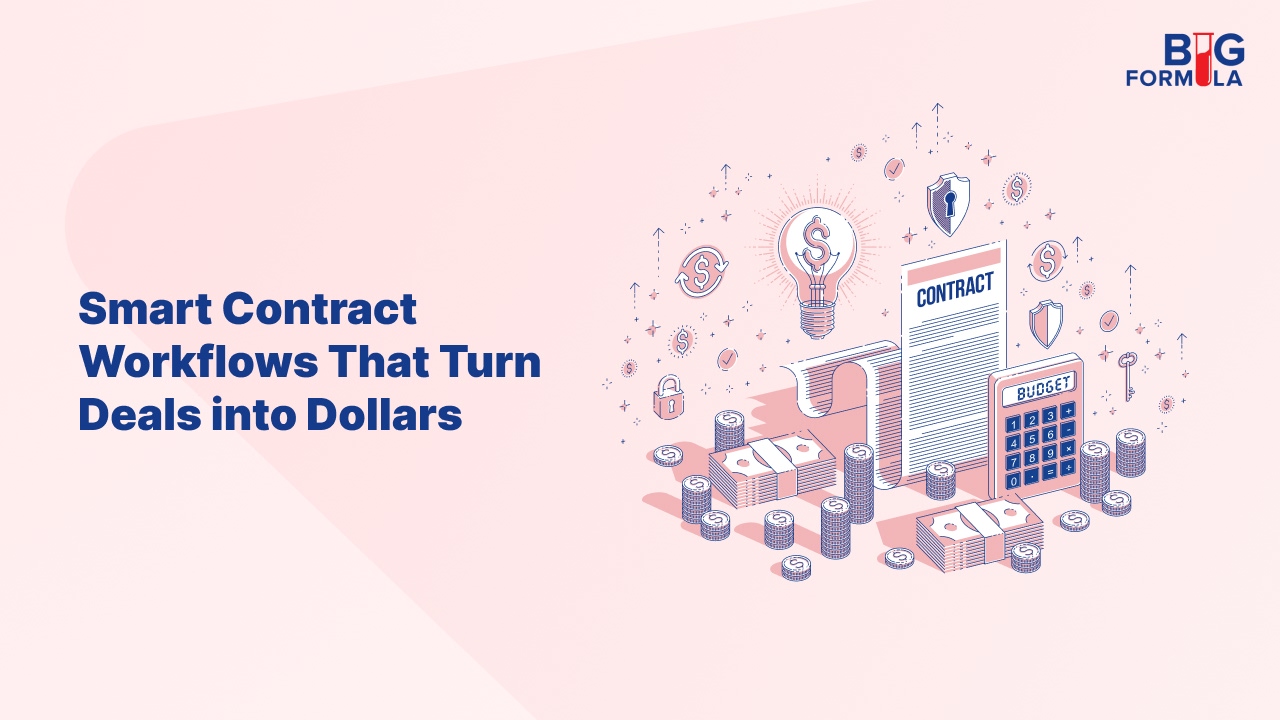
Kill the Paper Chase: Smart Contract Workflows That Turn Deals into Dollars
Automation in contract workflows does not just speed up contracts; it improves the way sales teams work and win. And let us not forget the revenue boost that almost always follows. But for the unconvinced, here is a breakdown on just how it all is done.
-
 By
Amal Purakkal
|
By
Amal Purakkal
|
- • 15 min Read
Sales teams know how frustrating it is when a sale that seemed good gets to the contract stage and suddenly stops. What should have been the last push to close, turns into a long process of approval treasure hunt – endless back-n-forth where documents move physically at a snail’s pace, long e-mail chains, even longer reviews, and delays in getting signatures that last weeks if not months. These bottlenecks do not simply hold down individual agreements; they also have repercussions on revenue estimates, team morale, and the company’s competitive position.
There is no doubt about it. Automated contract procedures that turn these old problems into smooth operations are the answer. Automation does not just speed up contracts; it also improves the way sales teams work and win by getting rid of human handoffs and speeding up the approval process. But for the unconvinced, here is a breakdown of how automated workflows are fixing bottlenecks and improving the overall standard of business activities.
When Traditional Workflows Break Down
Most businesses still use broken systems that cause problems at every stage. This is what a normal manual process looks like:
Sales personnel get contract templates from shared files or e-mail archives and then spend hours copying deal details and changing the conditions. Legal departments often get contracts as e-mail attachments, which makes it hard to keep track of different versions when numerous people are editing them at the same time. Finance checks prices by hand, which often leads to mistakes that need to be fixed. Final approvals become stalled in the inboxes of executives, transactions lose steam, and competitors start circling.
The Real Impact is Always on Revenue
These delays have real costs. Studies have shown that extending contract cycles by just one week can cut close rates by as much as 15%. When deals are stuck in contract review, buyers lose interest and could even change their minds about buying. Sales personnel spend up to 30% of their time on paperwork instead of building relationships, which makes them contract administrators instead of connection builders.
These problems get worse very quickly for businesses that are growing. A team that closes 100 agreements every three months can miss out on 15 to 20 deals because of delays in contracts. This might mean millions of dollars in lost sales.
How Automated Workflows Transform Sales Velocity
From contract creation to executive sign-off – automation turns sales from reactive to unstoppable. Here are a few core workflows and approaches that make it possible.
1. Intelligent Contract Generation
Smart templates linked directly to CRM systems pull deal data automatically into contracts – pricing, clauses, geographic rules, and approvals appear instantly based on pre-set conditions. This eliminates manual transcription errors, ensures compliance from the start, and turns hours of paperwork into minutes of progress.
2. Streamlined Approval Routing
Automated rules route contracts to the right stakeholders, escalating complex or high-value deals while skipping unnecessary legal review for standard agreements. Reminders, deadlines, and prioritised queues replace guesswork, giving decision-makers the context they need and shrinking approval cycles dramatically.
3. Real-Time Collaboration and Visibility
Cloud platforms allow simultaneous editing – legal reviews terms, finance reviews pricing – with every change tracked and version control automatic. Sales leaders gain full pipeline visibility, spotting bottlenecks early and guiding teams proactively. Transparency turns contract management from chaos into competitive advantage.
4. Digital Signature Integration
Digital signatures remove the final bottleneck once contracts are approved. Modern e-signature tools plug directly into contract workflows, sending signature requests automatically and tracking completion in real time. Buyers can sign on any device without printing, scanning, or e-mail chains. What once took days now takes hours – contracts close faster, revenue is recognised sooner, and sales cycles shrink dramatically.
5. Mobile-First Design
Customers expect smooth mobile experiences throughout the buying journey. Automated workflows ensure contracts render properly on phones and tablets, with signatures optimised for touch. This eliminates geographic delays and logistical friction. Sales teams can manage approvals and track progress from anywhere, keeping deals moving even when they are away from their desks.
Measuring the Impact on Sales Performance
In sales, speed is a competitive advantage – but speed without structure leads to mistakes, delays, and lost revenue. Automated contract workflows do not just accelerate deals; they create consistency, transparency, and control across the pipeline.
1. Cycle Time Reduction
Companies that use automated contract workflows usually experience big changes in important KPIs. Average contract cycle durations can drop by 50-80%, and some routine agreements can be finished in hours instead of days. These advantages add up over the course of the sales cycle, allowing employees to close more deals with the same resources.
2. Revenue Recognition Benefits
Faster contract execution means that revenue can be recognised faster, which improves cash flow and the accuracy of financial forecasts. Companies can book revenue weeks earlier than they might with manual processes. This gives them greater freedom when it comes to end-of-quarter pushes and annual planning.
3. Productivity Gains
Sales teams get back a lot of time when they do not have to do administrative activities. Reps who used to spend a lot of time coordinating contracts can now spend that time finding new clients, creating relationships, and closing deals. This surge in productivity frequently leads to a 10-15% rise in overall sales performance.
4. Error Reduction and Compliance
Automated workflows cut down on human mistakes that might slow down or abandon deals. Standardised processes make sure that the terms are always the same, the prices are always right, and the approvals are always correct. The workflow includes compliance requirements, which lowers the chance of legal problems and audit issues.
Fixing Sales Bottlenecks Through Smarter Implementation
To fix sales bottlenecks, you need to do more than simply use tools. You also need to use automation smartly so that deals go from creation to closing without any problems.
1. Start Where Bottlenecks are the Most Painful
Start automating at the points where contracts typically get stuck – like service agreements or renewals that repeat the same terms each time. Focusing on high-volume, low-complexity documents delivers quick wins and builds team confidence.
2. Standardise for Consistency and Speed
Templates that are not clear and review paths that are not always the same make things take longer. Standardised templates and set procedures for approval make sure that automation works well and gets rid of review loops that happen over and over again.
3. Design for Growth and Flexibility
Choose platforms that can handle more sales and more complicated contracts as they grow. Cloud-based CLM technologies help keep things flexible as workflows change.
4. Integrate with Core Business Systems
Combine automation with CRM, financial, and analytics technologies to get rid of duplicate data entry and see how contracts get going in real time.
5. Prepare your Team to Embrace Change
Ensure teams adapt and stay successful by training them early, making the benefits visible, and celebrating early wins.
6. Monitor, Measure, and Improve Continuously
Keep an eye on performance data and improve workflows on a regular basis. Continuous optimisation maintains automation in line with changing sales priorities and gets rid of new bottlenecks before they happen.
The Future of Automated Contract Management
Contract automation is no longer just an efficiency tool – it is becoming an intelligent partner in how deals are negotiated, approved, and executed. The next wave of systems will not only automate tasks but actively guide decisions, predict outcomes, and adapt to how your organisation works.
- AI-Powered Intelligence: Advanced platforms now use AI to look at how contracts are doing, offer the best terms, and guess how likely they are to be approved. Machine learning algorithms find trends that human reviewers might not see, which makes the procedure more efficient all the time.
- Predictive Analytics: Automated workflows give you information about sales performance, buyer behaviour, and workflow bottlenecks. Sales managers can spot patterns, make better predictions about results, and use data to decide how to best use resources and optimise processes.
- Integration Ecosystem Expansion: As automation systems get better, they are integrating to more and more business tools. This connection makes it possible for procedures to flow smoothly from initial prospecting to contract signing and renewal management.
Conclusion
Automated contract workflows are no longer an operational upgrade – they are a strategic advantage. By removing manual friction, accelerating reviews, and simplifying signatures, automation turns contracts from roadblocks into revenue engines. For sales leaders, platforms like BIGFORMULA CLM are not just tools; they are catalysts that transform legacy processes into measurable competitive gains. The real payoff is far greater than shorter cycle times: teams reclaim productivity, customers move through buying journeys without friction, and organisations gain unprecedented clarity over how deals progress. In a market where speed and precision decide winners, automation is not a question of if – but how quickly you can deploy it to unlock scale, consistency, and growth.
Amal Purakkal
Content Writer
Wondering how you can automate your contract workflows? Discuss your needs and goals with BIGFORMULA.
Reach out to us and schedule a Free Tech Consultation